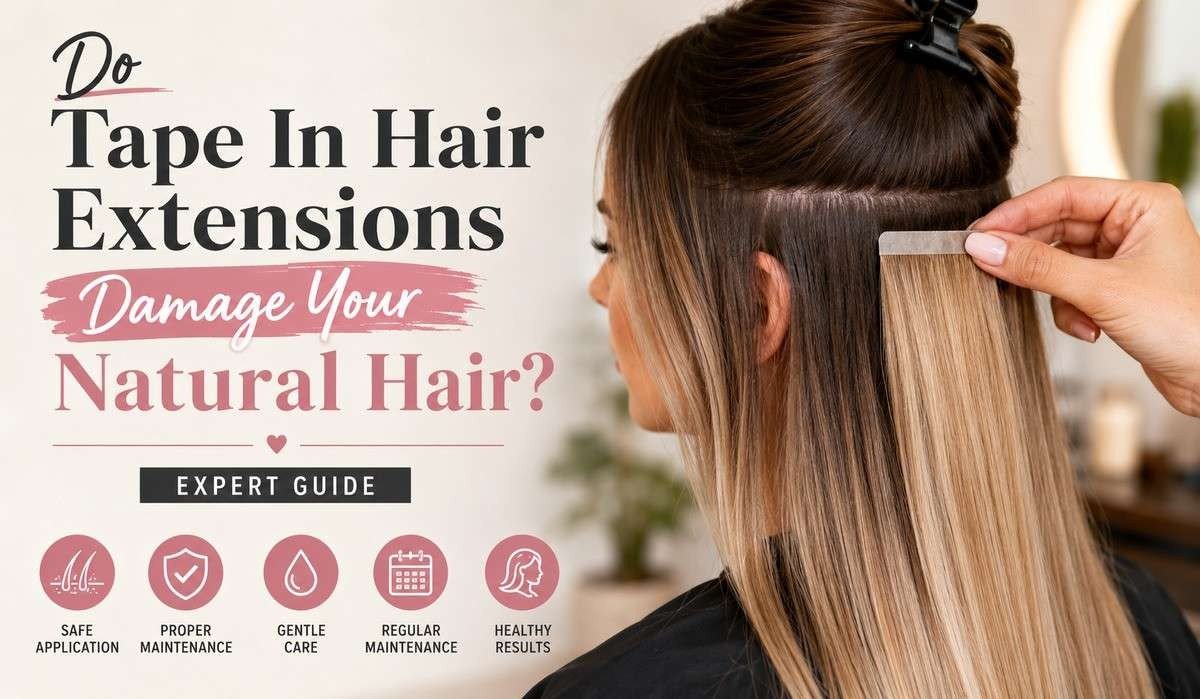
Do Tape In Hair Extensions Damage Your Natural Hair? Expert Guide
Tape in hair extensions are one of the most popular hair extension methods because they look natural, feel lightweight, and blend easily with different hair types. However, many people still ask one important question: do tape in hair extensions damage your natural hair?
The short answer is no, tape in extensions usually do not damage natural hair when they are installed, maintained, and removed correctly. Problems normally happen because of poor application, incorrect aftercare, or leaving the extensions in for too long.
Are Tape In Hair Extensions Bad for Your Hair?
Tape in hair extensions are considered one of the safer semi permanent extension methods. They are lighter than many traditional extension systems, which means they place less tension on the scalp and hair roots.
Unlike some heavier extension methods, tape ins distribute weight more evenly across sections of hair. This reduces the risk of excessive pulling or stress on the natural strands.
However, damage can still happen in certain situations, including:
- Incorrect installation
- Extensions that are too heavy for the hair type
- Poor quality adhesive
- Skipping maintenance appointments
- Removing extensions without professional products
- Excessive heat styling
What Causes Damage From Tape In Hair Extensions?
Most hair damage linked to tape in extensions is caused by improper use rather than the extensions themselves.
Incorrect Installation
If extensions are placed too close to the scalp or attached with too much tension, they can pull on the roots. Over time, this may lead to discomfort, breakage, or thinning around sensitive areas.
Professional placement is important because every client has different hair density and scalp sensitivity.
Using Extensions That Are Too Heavy
Thin or fragile hair cannot always support thick extension wefts. Heavy tape ins can create stress on weak strands and increase the risk of breakage.
A professional stylist normally chooses the extension weight based on the client’s natural hair condition.
Poor Maintenance
Tape in extensions require regular maintenance. When clients do not brush properly or skip repositioning appointments, tangling and matting may happen near the roots.
This can place unnecessary tension on the hair during brushing or washing.
Improper Removal
One of the biggest causes of tape in hair extension damage is removing them incorrectly at home. Pulling the tapes without using a professional adhesive remover can lead to hair breakage.
Do Tape In Extensions Cause Hair Loss?
Tape in extensions do not directly cause permanent hair loss in most cases. However, poor application or excessive tension can contribute to a condition called traction alopecia.
Traction alopecia happens when continuous pulling places stress on the hair follicles over time. Early signs may include:
- Scalp soreness
- Redness near the roots
- Small broken hairs
- Thinning around the hairline
The good news is that this problem is often preventable. Choosing lightweight extensions, following maintenance instructions, and giving the hair occasional breaks can help protect natural hair health.
Are Tape In Extensions Safe for Thin Hair?
Tape in extensions are often recommended for thin hair because they lie flat against the scalp and create a natural appearance. Compared to bulky extension methods, tape ins usually blend better with fine hair textures.
Still, not every thin hair client is the same. Hair that is heavily damaged, over processed, or extremely fragile may not be strong enough for extensions immediately.
In these situations, stylists may first recommend:
- strengthening treatments
- reducing heat styling
- scalp and hydration care
- trimming damaged ends
How to Prevent Damage From Tape In Hair Extensions
Preventing damage mainly depends on proper aftercare and professional maintenance.
Choose an Experienced Stylist
Professional installation plays a major role in protecting natural hair. A trained stylist understands correct section sizing, tape placement, and extension weight balance.
Use Sulfate Free Hair Products
Harsh shampoos may weaken adhesive bonds and dry out both the extensions and natural hair. Sulfate free products are usually recommended for extension care.
Brush Carefully
Extensions should be brushed gently with a soft bristle or extension safe brush. Brushing helps prevent tangles and reduces stress near the roots.
Avoid Sleeping With Wet Hair
Sleeping with wet tape in extensions can increase tangling and weaken the adhesive over time. It is better to dry the roots completely before going to bed.
Many stylists also recommend tying the hair in a loose braid or ponytail during sleep to reduce friction and matting.
Keep Up With Maintenance Appointments
Tape in extensions normally need maintenance every 6 to 8 weeks, depending on hair growth and care routine. Waiting too long may cause the extensions to shift or create tension near the roots.
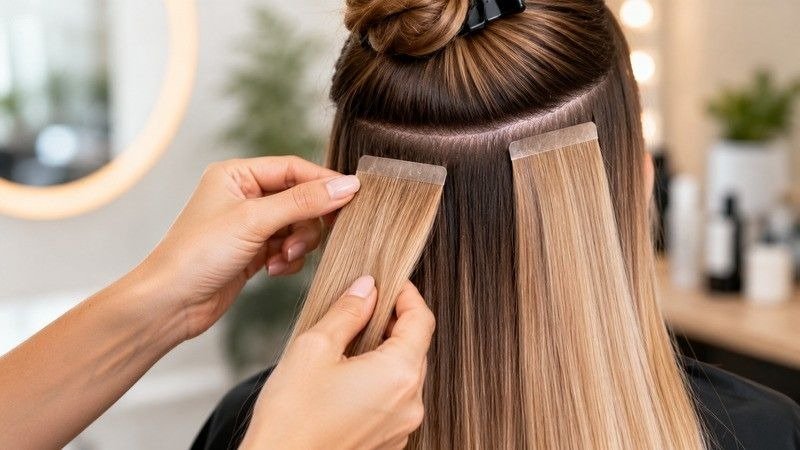
Signs Your Tape In Extensions Were Installed Incorrectly
Poor installation can lead to discomfort and possible hair damage. It is important to notice warning signs early.
Some common signs include:
- Pain or tightness after installation
- Extensions pulling when moving the hair
- Visible tape bonds
- Uneven weight distribution
- Excessive shedding
- Headaches caused by scalp tension
Can You Wear Tape In Extensions Long Term?
Many people wear tape in extensions for long periods without major issues. The key is maintaining healthy hair habits and allowing the natural hair to recover when needed.
Some clients choose to take short breaks between extension appointments to reduce stress on the scalp and hair follicles. Deep conditioning treatments and regular trims can also help maintain strong natural hair.
Long term results usually depend on:
- hair health before installation
- extension quality
- maintenance routine
- professional application
- proper removal process
Final Thoughts
So, do tape in hair extensions damage your natural hair? In most cases, the answer is no. Tape in extensions are generally considered safe when they are professionally installed, properly maintained, and carefully removed.
Most damage concerns come from incorrect application, poor aftercare, or using extensions that are not suitable for the hair type. Choosing an experienced stylist and following a healthy maintenance routine can make a major difference.
If you are considering tape in extensions in Cabarete, working with a professional salon can help you achieve fuller, natural looking hair while protecting the health of your own hair.
At Modern Salon By Sabrina, we help clients choose extension methods that match their hair condition, lifestyle, and long term hair goals.
Frequently Asked Questions
Do tape in hair extensions damage thin hair?
Tape in extensions can damage thin hair if the extensions are too heavy or installed incorrectly. When lightweight extensions are professionally applied, they are usually safer for fine hair types.
Why do my tape in extensions feel tight and painful?
Tightness or pain usually means the extensions were installed too close to the scalp or with too much tension. Properly installed tape ins should feel comfortable after the first day or two.
Can tape in extensions make your hair fall out?
Tape in extensions do not normally cause permanent hair loss. However, constant pulling or poor maintenance may lead to breakage or traction related thinning over time.
Can you go swimming with tape in hair extensions?
Yes, but saltwater and chlorine may weaken the adhesive and dry out the hair. Rinsing the hair afterward and using protective hair care products can help reduce damage.
Are tape in extensions better than sew in extensions for fine hair?
Many stylists recommend tape in extensions for fine hair because they are lighter and lay flatter against the scalp compared to sew in methods.